

Kassioun Editorial 1278: The Priority of the Economy: Tourist Grandeur or Combatting Poverty?
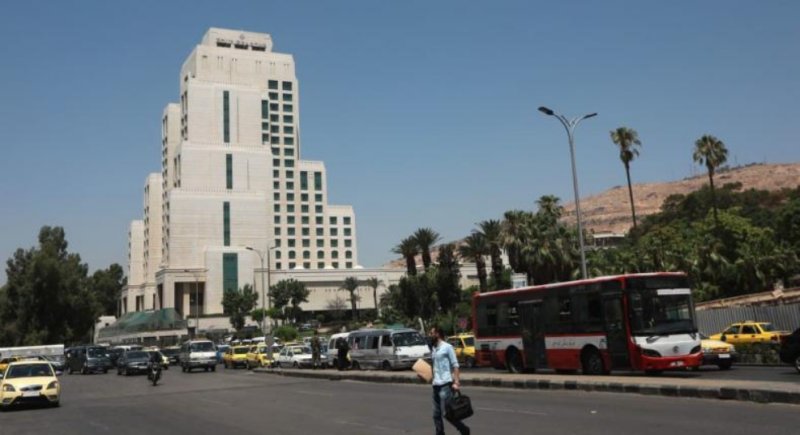
The famous English writer Samuel Johnson said in the 18th century: “Facts of life are stubborn things”. In the Syrian reality, the facts of life are stubborn and painful: the realities of rampant poverty, unemployment, IDP camps, a paralyzed economy, and deteriorating education and healthcare. These facts and realities cannot be ignored or bypassed — neither by diverting attention toward secondary sectarian, ethnic, or religious conflicts and contradictions, nor through attempts to numb social consciousness with hypothetical mega-projects that are largely touristic and showy in nature, resembling Beirut’s Solidere alongside an entire country suffering from poverty and slums.
An economy that does not serve the people — the general public, not just the privileged — is not a national economy. Rather, it is a threat to the country’s national security, unity, and civil peace. Therefore, any discussion about the economy, investment, and projects must begin with a clear answer to a clear question:
What are the socioeconomic priorities of the Syrian people?
First: Addressing poverty, which affects more than 90% of Syrians, including establishing and guaranteeing a minimum wage in all sectors that secures a minimum standard of living.
Second: Addressing unemployment, which exceeds 25% of the working-age population according to modest estimates from multiple research centers.
Third: Ensuring decent housing for hundreds of thousands of Syrians (according to conservative estimates) who are still living in IDP camps, and providing housing for millions of Syrians who live in rented homes and are no longer able to pay.
Fourth: Ensuring universal and free healthcare and education. This is neither a luxury nor an invention of some non-existent economic model; whether we are speaking about socialist countries or capitalist countries, including those of Western Europe, education and healthcare are either free or nearly free. Moreover, the history of our country, our region, and its prevailing “Arab-Islamic” culture — according to the description of the late thinker Hussein Muruwwa — demonstrates that education and healthcare were always free, universal, and supported by the ruling authority, from the Al-Zahiriyah Library, the charitable endowments for education, and the Nur al-Din Bimaristan in Damascus, all the way to the farthest healthcare and education spots across the country.
The current policies are incapable of achieving any of these priorities, even partially. In fact, there are no efforts — neither in thinking, planning, nor implementation — aimed at addressing the real priorities of the Syrian economy. Moreover, current policies are becoming increasingly explicit in showing that they are fundamentally unconcerned with confronting these priorities. According to one official’s description, the state apparatus is merely a “traffic cop” when it comes to the economy — meaning it bears no responsibility toward society.
We Need an Alternative Model!
First: Domestic resources do exist, and they are abundant. The key to investing them lies in increasing productivity through comparative advantages on the one hand, and through major agro-industrial complexes on the other. In short, through moving toward real industrial and agricultural production, far from repeating the previous illusions of the Assad–Dardari era, when “trade is the engine of growth” at times and “tourism” at others.
Second: Genuinely redistributing wealth in favor of those at the bottom — i.e., restoring subsidies, whether direct or indirect, especially for agriculture and industry. This must include ending the destructive measures affecting both sectors through electricity and fuel pricing, and halting moves toward privatization thereof. It also requires benefiting from the wealth of major corrupt figures, which should not be subject to bargaining and deals, but rather to transparency, publicity, and clarity. After all, this wealth is the stolen labor of the Syrian people accumulated over decades, not an inheritance that goes from one owner to another.
Third: Providing alternative housing for all Syrians within short to medium timeframes — no more than 5–7 years — is possible, beginning with reducing land prices to zero and involving the state apparatus as the primary investor.
Fourth: Building our international relations based on a realistic understanding of international balance of powers, meaning ceasing to apply the savage neoliberal formulas of the IMF and the World Bank, which economically devastate the country and its people while threatening its security and unity.
All of these require political will grounded in the interests of the Syrian people as a whole — especially the interests of the more than 90% living below the poverty line. The path toward securing this political will is for these people to become active participants in decision-making, and the gateway to that is a comprehensive general national conference with full powers.