

Kassioun Editorial 1260: “Illicit Enrichment” and Transitional Justice
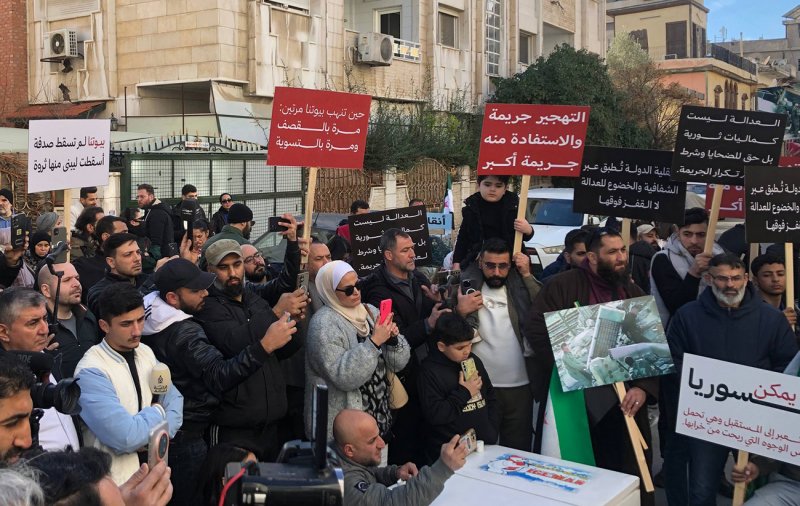
The agreement signed by Mohammad Hamsho last Wednesday, 7 January 2026, with the “National Committee for Combating Illicit Enrichment” sparked widespread—and justified—anger among the Syrian public. The agreement appeared to justify and legitimize “illicit enrichment”, rather than combat it.
The danger of this agreement does not lie with Hamsho alone, but with the overall mindset through which political and economic affairs in the country are being managed. In this regard, the following points can be noted:
First: The current authorities are moving economically toward fully adopting the liberal policies that were followed during the Assad era, blatantly since 2005—policies centered on shrinking the role of the state apparatus in favor of capital and big oligarchs, ending economic subsidies, privatizing sovereign sectors, imposing austerity measures, and raising the prices of all services across the board. Taken together, these policies have a well-known euphemistic name coined by the IMF and the World Bank: “structural adjustment”. Wherever it has been applied, it has “succeeded”—succeeded in expanding poverty rates, increasing social tensions, weakening states, killing real production in favor of services and rent-seeking, and raising levels of political repression to safeguard plundering—ultimately leading to internal implosion.
Second: The essence of any political regime in any country is not the ideological hat it wears—whether nationalist, leftist, Islamist, or otherwise. The essence of any regime is how wealth is distributed within the country. When wealth distribution favors 10% of the population against the remaining 90%, the regime represents the interests of the 10% and stands against the interests of the 90%, regardless of the regime’s form or ideology. In this sense, despite the historical significance of the fall of Assad’s authority, the process of building a new system is still at its very first steps. We continue to live under the unjust wealth-distribution system established by Assad. People therefore have every right to feel wary and outraged when they see a ghost of the past—with its plundering and repression—standing before them, washed of its sins and seeking to participate in “building” the present and the future.
Third: The agreement with Hamsho also casts intense light on how the concept of “transitional justice” is understood and applied. Justice here does not mean only the general criminal and political dimension—crimes of killing and detention committed against Syrians—but also the accumulated historical plundering that was killing them every day, every hour. In the pockets of Hamsho and those like him accumulates the stolen sweat and labor of millions of Syrians over decades. In their pockets accumulate the sighs and pains of Syrians who struggled daily over successive decades merely to survive and feed their children. If we were to draw a metaphorical picture, Hamsho and his ilk have stolen tens and hundreds of billions of hours of labor from Syrians over successive decades—as if the working Syrian people had been imprisoned in their jail for decades, working for them in near-forced labor, solely to inflate their fortunes with the people’s sweat and exhaustion.
Securing real resources for the state is possible if we radically change the logic of thinking—by changing the prevailing socioeconomic model toward a genuinely productive model that relies on the absolute advantages of the Syrian economy and is based on a real redistribution of wealth in favor of all Syrians. Otherwise, we will be on the path to reproducing the same former regime, in new forms—perhaps even by summoning ghosts from the past as well, of the Hamsho variety.