

Kassioun Editorial 1262: The New Electricity Bills Unite Syrians
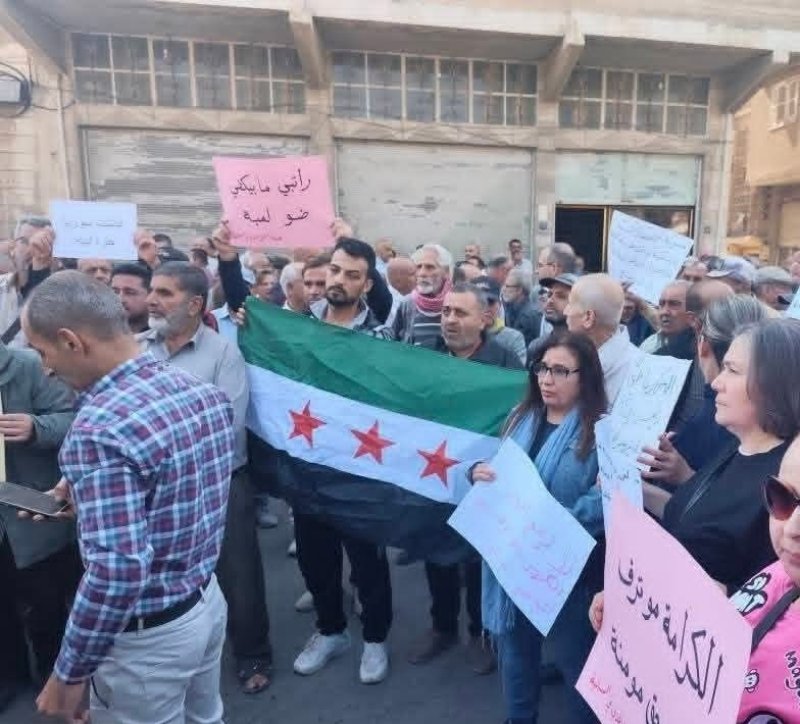
The new electricity bills have reached Syrian households, igniting what little patience people had left. Silent complaints have turned into open anger at the logic of unjust collection from the pockets of ordinary people—some of whom stated plainly, “I won’t pay!” Those who did pay did so with an overwhelming sense of betrayal by a government that was supposed to put an end to the economic policies of the Assad regime that impoverished and starved Syrians.
Amid the massive rise in living costs and the sharp decline in the real value of wages, the new electricity prices imposed on Syrians can only be described as utterly unfair. They are a concentrated reflection of the absence of a system of social justice. Electricity—which should be a general right for Syrians—has become a burden that devours the largest share of monthly income and deprives thousands of Syrian families of access to it.
More importantly, the catastrophe does not stop at living standards. These high electricity tariffs make the revival of Syrian production an impossible dream. How can a small factory, workshop, or farm resume operations amid prices whose costs have doubled in a way that prevents competitiveness even with neighboring countries? One clear result of this policy is the paralysis of the production cycle, followed by rising unemployment rates and the expansion of importing processes that drain foreign currency and blows up what remains of the country’s capacity for economic recovery.
Despite this, official rhetoric continues to repeat talk of reconstruction, as if these words alone could revive an economy suffocating under the very same economic policies. Genuine reconstruction cannot be built on bills that further impoverish Syrians. What is happening now is not reconstruction but illusion—grasping at air—promoted by elites with a vested interest in preserving the unjust economic system inherited from the Assad era.
The fundamental question remains: did those who made this decision seriously consider its repercussions on the country’s overall situation—economically, socially, and politically? Did they study what it means to impose grotesque prices on a people who have lost their incomes and savings? Making such a decision before any real effort to raise Syrians’ wages to a level capable of covering living costs is a gamble that opens the door to further popular unrest.
Yet, with all that, this issue has laid the foundation for a new equation that no one has managed to erase: the unity of the plundered against the plunderers. Today, millions of Syrians—across sects, ethnicities, and regions—are suffering from the same bills, facing a small group of old and new major thieves who have amassed wealth from the suffering of the Syrian people and plundered their resources under various pretexts and justifications. The electricity experience has once again proven that the conflict in Syria has been, and remains, between a plundering minority and a plundered majority.
Despite the departure of the Assad authority, the task of building a new political system has not yet been accomplished. As long as the old policies remain in place and follow the same approach, the Syrian people will continue to pay the price—until they find their path to building this new political system through the unity of the plundered against the plunderers, and to reaching a state that serves its people, not the pockets of those who plunder them.