

Articles (322)
The Food of Syrians is Subject to Fluctuations, and Agriculture Subsidies are Declining
kassioun
The suffering of the country is exacerbating at all levels, and the crisis that has been going on for 11 years now is exacerbating the danger that is affecting the country at the level of agriculture and food security. In the previous issue of Kassioun, we have reviewed how the numbers of Syrians exposed to the risk of food insecurity have increased to about 13.9 million people, (12 million of them are already facing severe food insecurity, while 1.9 million are at risk of being food insecure). All this is in conjunction with the rise in local statements that are “promising us” with further decline in the field of agriculture and food, as the increase in prices has become a “global phenomenon” simultaneously with the global crisis of food and energy.
Three-quarters of Government Subsidies Have Been Drawn in Ten Years.
kassioun
Despite the series of public objections and rejections that came in response to the Syrian government Resolution of lifting subsidies away from strata of the Syria people, some of its officials insisted on trying to “justify” the Resolution in several ways. The last of which was making Syrians feel “indebted” for the amount of subsidies announced in the State’s general budget of 2022, which amounts to approximately 6 trillion Syrian pounds, in a way that suggests two things: The first is that this announced figure will actually be spent on subsidies. The second is that government subsidies have increased given the announced jumps in the figures of subsidies of this year compared to the past year, as the figure of subsidies for 2022 is 63% higher than in 2021, when the government allocated 3.5 trillion Syrian pounds for social subsidies.
What Lies Behind “Israel's” Desperation to Play the Role of “Mediator” in the Ukrainian Crisis?
Written by Kassioun Research Unit
Two weeks ago, we looked at what the “Israeli” media was saying about the events in Ukraine, in its intensive coverage of the ongoing events during the first few days of the battle. There were two main ideas that we think are worth recalling: first, nearly all the articles talked about Syria in the context of the analysis of the events in Ukraine; and second, “Israel” acting as if it is just another “normal” state, trying to balance its international relations based on its interest, and thus trying to “not clearly taking sides”.
In Time of Lifting Subsidies: How Much Did Private Banks Earn in One Year?
kassioun
Since the announcement of lifting subsidies away from strata of the Syrian people over the past months, the government has spared no opportunity without announcing that the Resolution of lifting subsidies is a result of its desire to repair the budget deficit, pointing out in several ways to the difficulties the State is facing due to the scarcity of revenues. In short, the government has used every way to justify reaching out to the pockets of citizens, citing its lack of options to increase the State’s revenues, and ignoring – at the same time – the coplaint that is arising to point out to profit positions that are still present in the country and are more useful to be a source for increasing the State’s revenues. In the following, Kassioun reviews one example; the profits of private banks operating in Syria during the past year.
From the Sequestration of the Syrian Pound to its Release; towards further Public Impoverishment
Assem Bouzo
All the financial and monetary procedures that have been officially taken and implemented, especially during the previous two years, boil down to the aim of sequestrating the Syrian pound and preventing the speculation of it, in addition to limiting the circulation of its cash flow as much as possible. Regardless of the accuracy and validity of these Resolutions, one of their consequences was the inflation of money supply in public and private banks, reaching a large excess liquidity that is not practically invested. These mechanisms of releasing this excess bank liquidity have started through a series of financial and monetary Resolutions, and these Resolutions have given way to (public and private) banks to widely open the door for lending, by opening the loan ceiling for some, and raising it for others.
Syrian Extremists: Let There be War and Ruins… Not Only in Ukraine, But in Syria Too!
Reem Issa
No sooner had the latest Ukraine events begun, a total alignment shaped up globally. This was not limited to the countries involved in the crisis and those affiliated with them or entrenched in their trench, but also included forces, parties, organizations, and personalities from all over the world.
The Ukraine Battle and What’s After it
Written by Kassioun Research Unit
The whole world stands, as the saying goes, on one foot, ready for major changes to really take place, and apprehensive about the ever-present dangers as long as the financial elites have access to the terrifying red buttons of the most destructive and deadly weapons. However, all this is only the outward appearance of a much more complex and multifarious picture.
With Ukraine, the Playing Margins between West and East are Narrowing over the Entity’s Fears of Effects on it and on Syria
Written by Kassioun Research Unit
Since the Ukrainian crisis started dramatically escalating lately, and especially after the Russian military operation began, states around the world started aligning sharply on one side or another and things polarized to the maximum extent: you’re either on the West’s side or against it. Nevertheless, some regional and international players found themselves torn amid this alignment, each for different considerations.
Behind the Ambiguity of Lifting Subsidies; Reducing the Wages of Millions of Syrians
kassioun
The repercussions of the government resolution to lift subsidies for specific strata of the Syrian people had not yet been stabilized, while indications began to increase about the whole process being nothing more than a first step towards completely lifting governmental subsidies. It happened very quickly in way that threatens the life of millions of Syrians with further deterioration and bad conditions.
What Do the Joint Air Patrols on the Outskirts of the Occupied Golan Mean?
Written by Kassioun Research Unit
On January 24th, the Russian Ministry of Defense announced conducting joint air patrols with the Syrian army near the occupied Syrian Golan Heights.
More...
Four Levels of Reading the Current International Transformation
Written by Kassioun Research Unit
If we put aside the Western propaganda – and those promoting it – which denies that there is any change in the international balance of power, turns a deaf ear and a blind eye to the new reality, considering that what has been going on for the past 15 years is just a temporary setback that has befallen the American cowboy’s horse; if we put that aside, we will find ourselves before a very complex, multifaceted, and multi-layered global phenomenon.
The poorly understood and Insoluble Problem of Electric Power
Assi Ismail
Many promises are heard from time to time about improving electric power supply. However, reality proves the opposite of these promises, as rationing hours are increasing, and the need to resort to costly available alternatives is expanding further.
Why is the ISIS Rabbit Getting Pulled out of the Hat Again?
Saad Saeb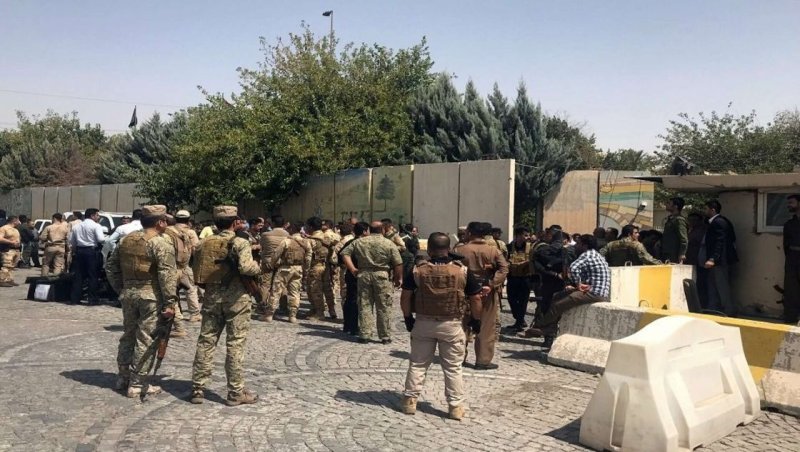
More than two years after absence of any major operations of the terrorist organization ISIS, it has reappeared in two simultaneous operations, in Iraq and Syria.

Another year of tragedy has passed, leaving many painful images in the depths of the Syrian memory. Another year that still caries an image of the spillover of the crisis, carrying the smell of war with it in a new way!