

Articles (322)

The past few weeks have witnessed a lot of talk about what is being called the “Arab Gas Pipeline”, which is supposed to start from Egypt, going through Jordan, to Syria and Lebanon. Additionally, one of the pipeline’s branches will reach – according to the Egyptian media – between the Egyptian Arish and occupied Ashkelon, with the possibility of an additional branch reaching Iraq.
The Next Wave of the Syrian Popular Movement… Small Dreams and Big Dreams!
Mohannad Dlykan
During the past ten years, Syrian society has produced very diverse forms of what can be classified within the general framework of the term “popular movement”. Nevertheless, the only form that has achieved “media recognition” is demonstrating.
Possible US Approach to Syria, Through the Afghanistan Lens: The Next Withdrawal is a Blessing from Which We Should Benefit
Reem Issa – Saad Saeb
Two weeks following what was considered a “sudden withdrawal” by the US from Afghanistan, readings and analyses of the situation are still pouring in. We will look here only at one dimension of the issue, and that is the one relating to the movement of terrorist or extremist elements (or as the mainstream western media likes to call them “jihadists”), in general and from a Syrian perspective.
A Syrian Lesson in Detachment from Reality: Ignoring the Economic Collapse.
kassioun
What is the reality you imagine when the executive authorities in a country talk about topics such as: alternative energy, service automation, and attracting investment? Such topics can be sub-tasks in the agenda of a region or local government within a stable country. However, surprisingly, they are main topics in Syria 2021: the year that is witnessing the most severe socio-economic collapse within the ten years of the greatest humanitarian disaster after WW2!
More than 3 Million are Injured in Syria; A Comprehensive File; and A Mock Management
kassioun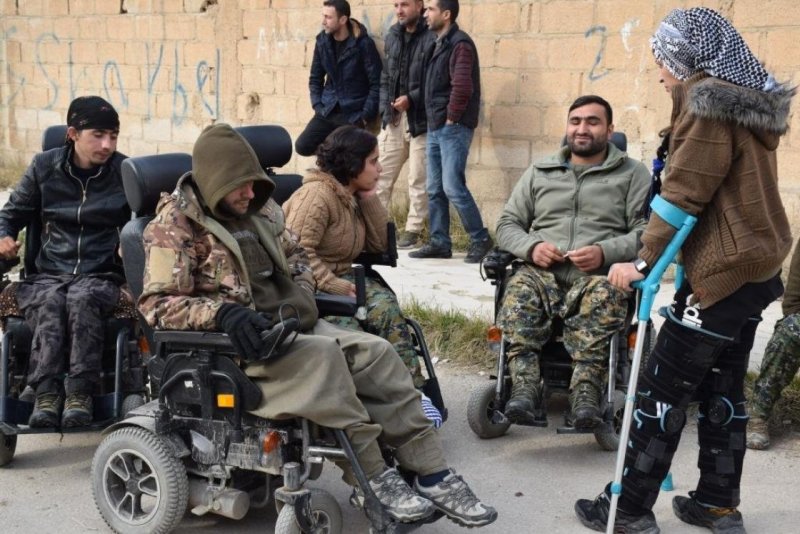
In 2017, the World Health Organization estimated that nearly 3 million people in Syria are war-injured, and are suffering from disabilities at different levels. That is, nearly 15% of the population in Syria back then were living with the pain and the direct consequences of war on their bodies. The vast majority of them are forgotten, and they are not surrounded by any “special care” or compensation, not even by the cameras of international organizations.
The Zionist Entity’s Concerns as it Watches Afghanistan A Look Around “Israeli” Media
Reem Issa
Nearly a week has passed since the world watched events unfold and at a somewhat dubiously high pace following the so-called US “sudden withdrawal” from Afghanistan. It was no surprise that the reverberations of those events were in a way greater and louder beyond the borders of Afghanistan than in Afghanistan itself. In many parts of the world, most certainly ours, the same basic questions arose especially with Washington’s “allies” (whether or not they have declared themselves so): “Will our turn come?”, “When will it be our turn and how?”, and “What should we do in anticipation?”
10 Questions Posed by Afghanistan to the World, Our Region, and Our Country
Mohannad Dlykan
Reactions to the Afghan events are still ongoing in and around Afghanistan and throughout the world, and perhaps the reactions outside Afghanistan are many times greater than inside it. That is understandable because what happened there, and what will happen, is closely connected to the nature of American policy in the context of its competition and conflict with the rising powers. It is also closely connected to the mechanisms by which those competing forces deal with the Afghan events, and this is subsequently connected to the overall international balance and its transformations, the effects of which reach all parts of the world.
Hereinbelow, we will try to present a set of questions that we believe the Afghan events have urgently put on the global discussion table, including those related to our region and our country, Syria. However, we should first provide a quick description of what happened, not from the news side of course, but somewhat the analytical side.
Features from the “Black Hole” of Corruption; Is 77% the proportion of Wasting Public Investment?
Ashtar Mahmood
There is a striking phenomenon in the Syrian statistics in recent years, which is: a large increase in the proportion of GDP devoted for investment. That is, a larger part of the income produced annually goes to local investment, while a smaller proportion goes to consumption, whether private consumption that household consumption constitutes most of it, or public consumption spent by the government.
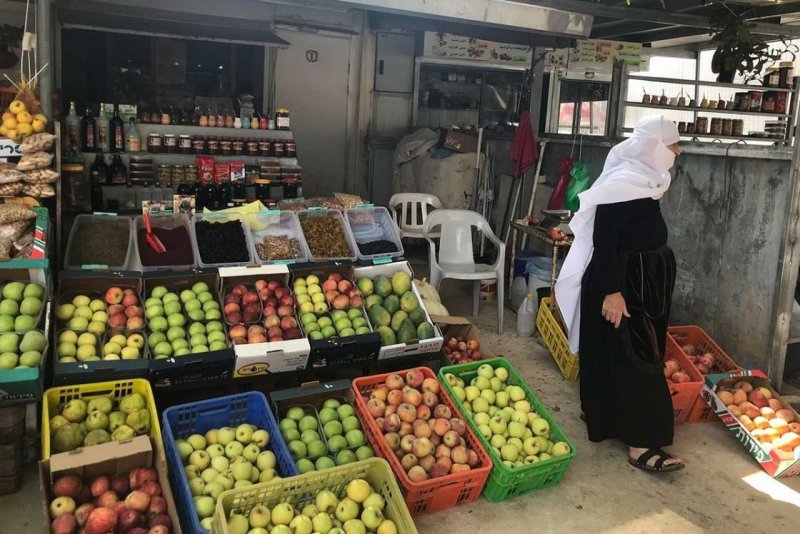
The living expenses of a family of five in Damascus have increased in mid-2021 to reach 1240 thousand Syrian pounds. That is according to Kassioun’s index based on 8 basic needs: food, housing, transportation, healthcare, clothing, education, household furniture, telecommunication, in addition to a proportion of 8% for other emergency needs.
Oil and Electricity; What is Said on Official Media vs. What Reality Says.
kassioun
The production of electricity in Syria is becoming an important indicator of the level of economic deterioration. While those concerned with the energy sector (producing and generating oil and gas) talk about prospects for the future amidst deterioration, indicators related to the political economic structure of contracts and partnerships limit the serious possible improvement in the situation of electricity production.
More...
Shay Levi Recalls “Grenade 20” in Threatening the Russians
Mohannad Dlykan
On July 30, the “Israeli” website MAKO published a long article in Hebrew entitled: Exactly 51 years ago: when the IDF set a trap for the Russian force sent to the region. The author of the article is well-known Zionist journalist Shay Levi.
(Revolutionary) Solutions via Solar Power are New Illusions!
Ashtar mahmood
There are a lot of statements about generating solar power under the suffocating electricity crisis. However, not even 25% of the daily needs of Syrians in their homes is secured, while entire regions in the country nearly get no electricity! Amidst the escalating electricity deterioration, the repeated talk about solar power perhaps reflects other investment and narrow aspects.

Things have not yet completely calmed down in the Syrian province of Daraa following the recent military actions, but it is clear things are on their way to relative calm, albeit through many difficulties.
Once Again: Regarding the Chinese-Russian “Contradiction”
Salma Abdullah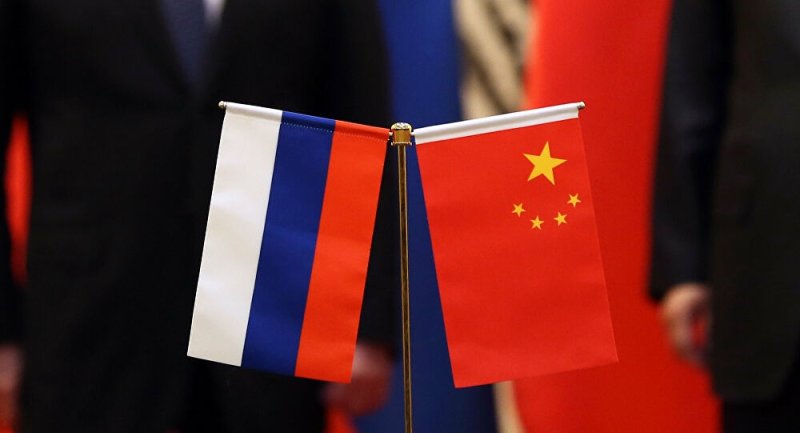
Kassioun published in a previous issue, No. 1028, dated Monday, July 26, an article entitled: Regarding the Chinese-Russian “Contradiction” in Syria. Some statements and articles written on the subject over the past two weeks indicate that more can be said about the issue.