

Kassioun Editorial 1289: How Should the Protest Movement Be Engaged?!
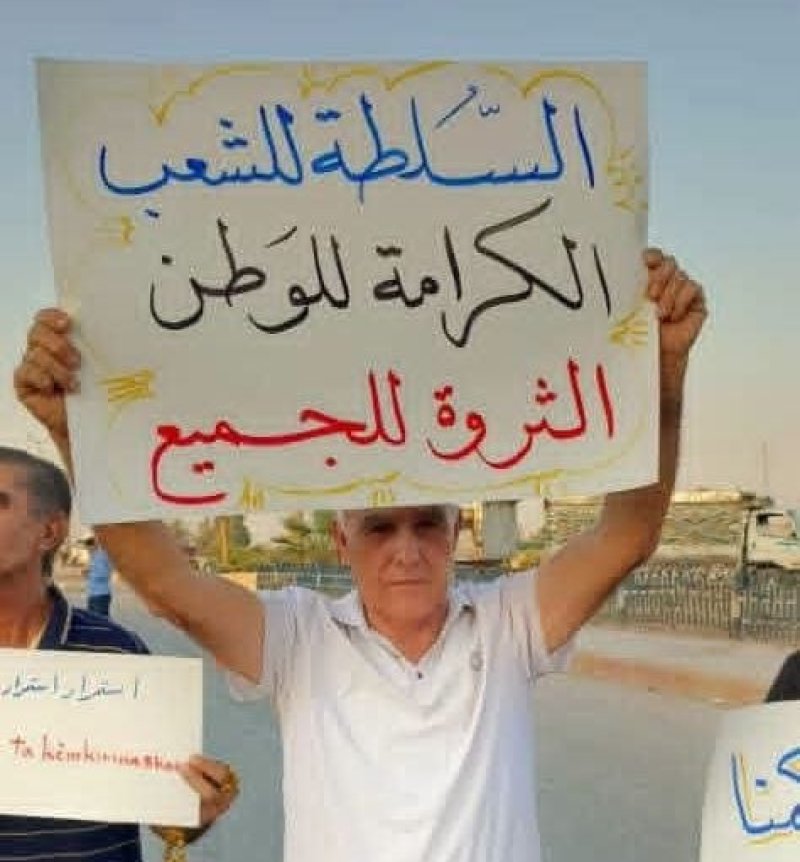
Kassioun has documented more than 250 protest actions—sit-ins, strikes, demonstrations, and others—over the past three months. These took place in nearly all Syrian governorates and were overwhelmingly driven by socioeconomic demands directly connected to Syrians’ living conditions and the hardships they face.
Various sources had previously documented up to 80 protest actions during the months of February, March, and April. This indicates, at least numerically, that the general trend of the protest movement is toward escalation and deepening, both horizontally and vertically.
The political report presented to the third meeting of the Central Council of the People’s Will Party on 18 July 2026 noted that “it is expected that the general trend will continue to escalate in the absence of solutions and amid the ongoing deterioration of economic and living conditions. However, it is also expected that the movement will experience waves of decline and advance, depending on the various circumstances the country goes through—particularly security-related conditions, which may push the movement toward a temporary retreat or contraction, followed by a stronger resurgence”.
Based on these facts, together with:
1- the continuing tensions in the region and their repercussions for Syria, particularly economic repercussions;
2- the continued “Israeli” sabotage, especially through incitement and attempts to turn Syrians against one another; and
3- the continued political and economic pressure exerted by the US,
the three main possibilities for the development of the popular protest movement are as follows:
First: The possibility of decline and retreat
This possibility is close to zero because the socioeconomic conditions of the overwhelming majority of Syrians are not merely extremely impoverished; they continue to deteriorate amid regional conditions on the one hand and the domestic neoliberal policies currently being pursued on the other. These policies are also accompanied by a new form of corruption that has begun to manifest itself through displays of extravagance, condescension, and arrogance—behaviors that provoke Syrians and show disregard for their suffering.
Second: The possibility of a chaotic escalation toward violence
If the authorities fail to respond to people’s demands, and if political forces are unable to play the role required of them in helping organize the protests within broad national frameworks—away from violence, foreign intervention, and regional, sectarian, religious, and ethnic solidarities—then the possibility of external actors exploiting the situation by pushing it toward violence and infighting becomes both serious and catastrophic.No Syrian side would be spared from such a scenario, nor would the country as a whole be spared from its consequences, including the potential impact on its geopolitical unity.
Third: Political forces and the authorities engaging with the movement
The only safe and constructive path is to deal with the popular movement as an objective and unavoidable reality, and as a major source of energy that can be directed positively in the interests of Syria and the Syrian people. The only way to achieve this is to engage with the movement by listening to it, meeting its demands, and helping it organize its ranks, ultimately leading to its genuine participation in the governance of the country and the management of its resources. This should be based on the following three principles: “Power to the people, dignity to the nation, and wealth for all”.
At the broader political level, such engagement must take concrete and clear forms. It must not involve ignoring the protests, attempting to placate them with promises, or, of course, trying to suppress them.
Genuine engagement at the political level must begin urgently with the formation of a fully empowered national unity government that includes the country’s principal political and social currents. Its first task should be to convene a general national conference responsible for producing a new social contract and developing a shared Syrian vision for a new Syria and for addressing its accumulated problems and crises.
Such a vision should form the nucleus of a comprehensive national project and a shared Syrian dream around which Syrians can unite and work side by side—free from external pressure and intervention, and free from all forms of sectarian, religious, or ethnic division among them.