

Kassioun Editorial 1297: “Thieves… Thieves”
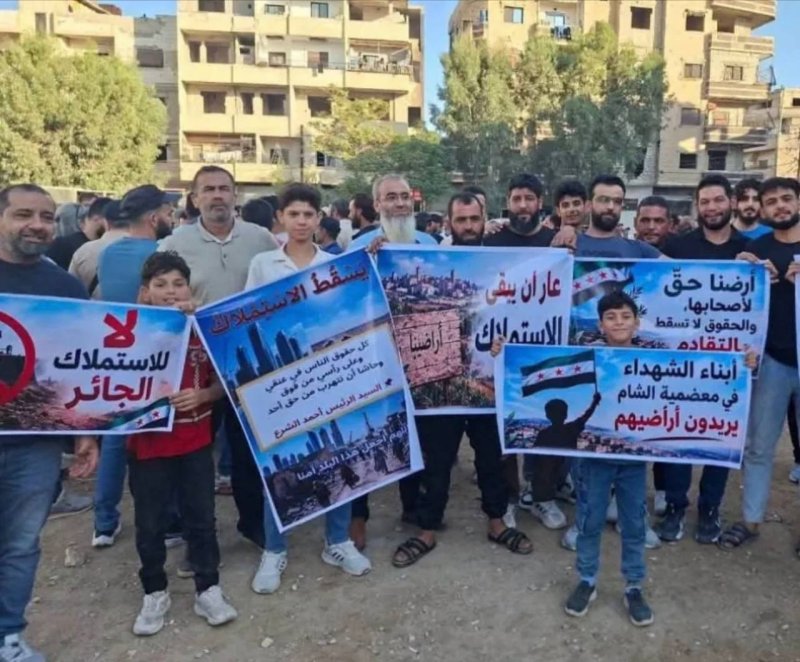
The popular protest movement in Syria continues to gain momentum week after week, and day after day. It displays several clear and positive characteristics, foremost among them:
First: It is a peaceful movement that has learned from the lessons of the past. It therefore categorically and unequivocally rejects violence in all its forms.
Second: It is a movement with a clear class-based foundation. It represents the pains and aspirations of 90% of Syrians—those “at the bottom”, the “destitute” impoverished and dispossessed—in confrontation with the plunderers and thieves, whether old ones who have merely changed their “outfits”, or new ones who have begun climbing the ladder of plundering.
Third: Because it is a movement of the “destitute”, it is inherently crosscutting of ethnicities, religions, and sects. Through their concrete experience, its participants see that the plunderers themselves also transcend ethnicity, religion, and sect, and that it is in the interests of the plunderers to make the poor fight among themselves, thereby distracting them from those who are plundering all of them, regardless of their different identities or ideological, political, and social orientations.
Fourth: Anyone who comes into direct contact with the protesters notices the high degree of vigilance among its ranks compared with the situation in 2011. In 2011, almost anyone could present themselves as a “representative” of the people and appoint themselves as their “leader” simply by appearing on the media and repeating a few slogans. People accepted such leadership in good faith, but also because of their limited political experience and lack of political awareness at the time. Today, things are completely different. Protesters are extremely careful about whom they choose to speak on their behalf, and they are highly sensitive to any intervention from outside their ranks, whether that intervention comes from countries, political forces, or individuals. This is an indication of an important level of awareness produced by the bitter experience of the past.
Fifth: The general characteristic of the slogans being raised is that they are rational and measured, without unrealistic leaps, with a clear and deliberate focus on economic and livelihood demands, which unite the “destitute”. This means that the natural development of people organizing to defend their interests is proceeding in a sound and gradual manner.
Sixth: Day after day, the popular movement is identifying the organic connection between grand corruption and national treason. The major corrupt figure—whether the old or new one—is necessarily a point of connection with an external enemy (and there are now concrete examples of this). This means that the struggle against the “thieves” is simultaneously a patriotic battle. It is also a democratic battle over political freedoms: the ability of people to represent their own interests and determine their own destiny on major issues, including the form of the state, the constitution, and so forth.
The rise of the popular movement is not a straight line. It is a winding curve, rising at times and falling at others, but its overall trajectory is one of continuous upward movement—in terms of numbers, geographical reach, levels of awareness and organization, forms and types of protest, and the new forms of creativity it generates.
It is an honorable movement defending people’s economic and livelihood interests while, at the same time, defending the interests and sovereignty of the country. Therefore, it is the duty of all uncontaminated and patriotic forces, regardless of where they currently stand on the political spectrum and regardless of the ideological hats they wear, to stand alongside the movement of the people, alongside the dispossessed, and against the plunderers and thieves. For this movement of the people is the bright point upon which we can build in order to reunify the country and lead it out of the deep and comprehensive crisis in which it finds itself, toward a genuinely new Syria: a Syria of social justice and human dignity