

Kassioun Editorial 1291: Grand Corruption and Real Change
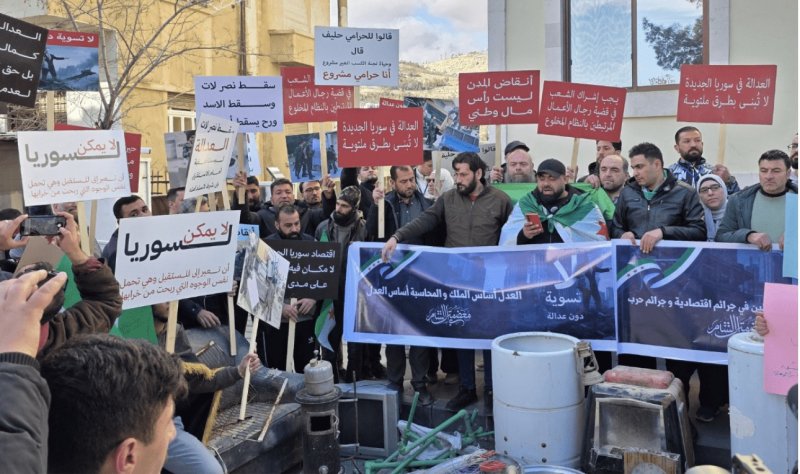
A campaign that recently began against one of the leading corruption figures of the former regime has attracted a significant degree of sympathy and solidarity from broad segments of Syrians. It has drawn attention not only to the targeted individual, but also to a broader phenomenon concerning the system of grand corruption as a whole—both old and new—and the extent to which it affects the possibility of the country emerging from its deep crisis.
In this context, a number of necessary conclusions need to be firmly established:
First: Those who should be subject to “transitional justice” are not limited to those whose hands were directly stained with the blood of Syrians. They must also include those who plundered the fruits of Syrians’ labor for decades, contributed to pushing the country toward internal fighting, financed and incited it, and played roles that were often more dangerous and consequential than those of the direct killers—and which were responsible for the shedding of the blood of tens of thousands, albeit indirectly. These people do not belong to any one political side; rather, they include the warlords and war profiteers from all sides.
Second: Genuine popular activism against corruption—particularly grand corruption—is profoundly positive and necessary. It should be encouraged, supported, and provided with the frameworks necessary for its development, including trade-union and political structures. Giving Syrians as a whole the real tools needed to pursue corruption and hold those responsible accountable prevents a merely superficial “fight against corruption”. It also prevents the use of “fighting corruption” as a tool for redistributing wealth among the majorcorrupt actors themselves, and ultimately against the interests of Syrians as a whole.
Third: Although the Assad regime collapsed more than a year and a half ago, its regime remains essentially in place—in terms of how wealth is distributed and how the country’s economy is managed, based on neoliberal formulas and on primarily looking outward, toward external interests and requirements, rather than inward, toward the needs of the country. This means that Syrians still have another stretch of the road to travel in achieving comprehensive, radical change—precisely in the system of wealth distribution and economic management—so that it serves the interests of the 90% of Syrians living below the poverty line. Simply replacing the faces of those who plundered the country is merely a change of hats; what is needed is real change in the interests of the exploited and against the thieves.
Fourth: In light of the globally, regionally, and domestically deteriorating circumstances, relying on domestic resources and capabilities is a matter of life and death for the country and its people. Since resources are already scarce, grand corruption must be treated as high treason, because it pushes the country to doom, preventing it from reunifying Syrians, deterring external enemies, let alone reviving the economy and undertaking reconstruction.
Genuinely fighting corruption and building a new economic model that serves the interests of 90% of Syrians is one of the real dividing lines between genuine change and cosmetic change. The Syrian people deserve real change that guarantees them a dignified and honorable life in their homeland, and they will not rest until they have secured their full rights.