

Kassioun Editorial 1296: The Latent Power of Syrian Patriotism
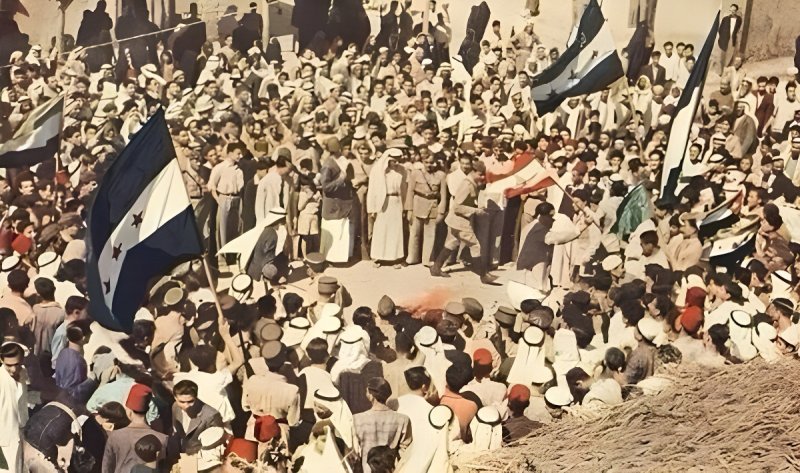
Over the course of the war—and, before that, through decades of corruption and exploitation of slogans—Syrian national identity has been deeply abused, distorted, and undermined. At the same time, external forces, foremost among them “Israel”, have used every means at their disposal to weaken and ultimately destroy that identity.
Although the modern Syrian state is a little more than a century old, Syrian identity—as a sense of belonging to this land, its culture, and its history—is far older, deeper, and more deeply rooted. It transcends the successive authorities that have ruled, and will rule, the country.
The generation that can, in a historical sense, be regarded as the founding generation of the modern Syrian state—the leaders of the Great Syrian Revolt against French colonial rule, including Saleh al-Ali, Yusuf al-Azma, Sultan Pasha al-Atrash, Ibrahim Hananu, and their comrades—possessed a set of exceptional qualities that enabled them to lay strong foundations for the Syrian state. Those foundations remain to this day; despite all the blows they have endured.
The founding fathers not only rose above their religious, sectarian, and ethnic affiliations in favor of a broader, inclusive Syrian identity; they were also distinguished by a remarkable degree of ascetism. Those of them who lived on after independence did not pursue wealth or public office, even though both were within easy reach. Nor did they seek prestige or power. They did not see themselves as the beginning of history. On the contrary, they recognized the contributions of those who preceded them and considered themselves part of a historical continuum.
The successive authorities that followed, by contrast, repeatedly behaved as though history began with them. Bashar al-Assad and his regime naming Hafez al-Assad as the “founding leader” is perhaps the clearest example. For the most part, the successive authorities that ruled Syria post-independence looked outward—to foreign interests, demands, and approval—while paying little attention to the country’s own people.
This was compounded by the systematic dismantling of the state’s social role, the unjust distribution of wealth, and the ostentatious privilege enjoyed by ruling elites—belonging to all ethnicities, religions, and sects. Against this stood poverty and deprivation experienced by the overwhelming majority, likewise belonging to every part of Syrian society in all its ethnicities, religions, and sects. Together, these forces inflicted profound damage on national identity and the sense of belonging to a common homeland, nearly completely destroying them through rivers of blood and the entrenchment of de facto divisions.
A concert in Damascus is merely a fleeting event, which cannot, by itself, serve as foundations on which to build anything or draw conclusions. Nor is there any shortage of attempts to appropriate it politically—some in support of the authorities, others in opposition to them. Yet the way Syrians responded to the concert by artist Assala should be understood as a sign of something deeper: a powerful reservoir of latent energy, and a profound longing for a shared identity capable of bringing Syrians together as siblings who care for and cooperate with one another, rather than as enemies locked in conflict and war, consumed by mutual hatred.
The challenge is to release that latent energy and transform it into a force for rebuilding and prosperity. That requires Syrians to have a genuine role in shaping their future. It requires a shared Syrian vision—one that transcends authorities and governments.
The first step in articulating such a vision should be the convening of a comprehensive and inclusive general national conference, modeled on the Constituent Assembly of 1919. Such a conference could help restore and renew Syrian national identity, carry it into a new historical phase, and lay the foundations for the economic and political reconstruction of a truly new Syria; a Syria with a new political order—one whose compass is social justice, and whose first and foremost principle is the dignity of the human being.